Source Hot Forged Galvanized Hydraulic Fitting for Pumps, Valves, Cylinders
Compare 30 listings for hot forged galvanized hydraulic fitting from Chinese manufacturers. Buyers can review specifications like material, size, and certifications to select suitable components for industrial fluid systems.
Key considerations
Products List
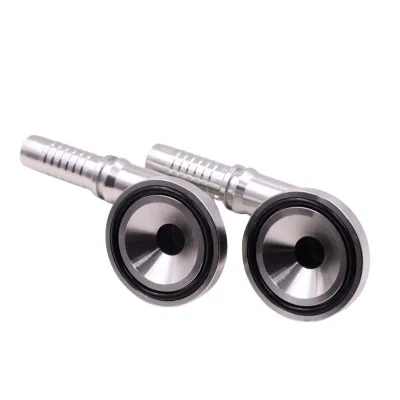


Comprehensive Sourcing Guide
Strategic Sourcing Guide for Hot Forged Galvanized Hydraulic Fittings
Understanding Product Attributes and Manufacturing Methods
When sourcing hot forged galvanized hydraulic fittings, buyers must first distinguish between the specific manufacturing processes and material compositions that define the product's integrity. The core keyword implies a two-stage production method: hot forging followed by galvanization. Based on available industry data, hot forging is a recognized manufacturing way for high-strength fittings, where metal is shaped under high pressure while heated to improve grain structure and density. This process is distinct from casting methods like lost wax or gravity casting, which are often associated with different tolerance levels and surface finishes. The observed data indicates that forging is a primary method for producing robust fittings, ensuring the component can withstand the high pressures typical in hydraulic systems.
The material composition is equally critical. While the specific keyword mentions "galvanized," the underlying substrate is often carbon steel, which provides the necessary tensile strength for hydraulic applications. However, market listings also show stainless steel and brass as alternative materials for specific environments. For a galvanized product, the base material is typically carbon steel, as the zinc coating is applied to prevent corrosion on ferrous metals. The surface preparation for these fittings often involves sand blasting prior to coating to ensure adhesion. The resulting finish may appear yellow, white, silver, or chrome, depending on the specific plating or passivation process used. Buyers should verify that the "galvanized" claim refers to a zinc-plating process that meets the required salt spray resistance, as observed data suggests a benchmark of more than 72 hours for salt spray testing in similar high-quality components.
Technical Specifications and Dimensional Standards
Precision in dimensions and adherence to international standards are non-negotiable for hydraulic fittings, as leaks or failures in these systems can lead to significant operational downtime and safety hazards. The technical specifications for these fittings are governed by a range of global standards, including GOST, GB, DIN, ANSI, BSW, and JIS. When evaluating a supplier, it is essential to confirm which specific standard their product line adheres to, as tolerances and thread profiles vary significantly between regions. For instance, a fitting compliant with ANSI standards may not thread correctly with a component designed for JIS specifications, even if the nominal size appears identical.
Size ranges for these fittings typically span from 1/4 inch to 2 inches, with some specialized lines offering sizes from 3/16 inch to 2 inches. The connection types observed include male and female flange configurations, which are standard for high-pressure applications. The manufacturing tolerance for precision-machined parts in this category is often cited as +/-0.10mm, a figure that buyers should request as a verification metric during the supplier evaluation phase. While some data points mention "Standard" dimensions, this is a vague descriptor; a rigorous procurement strategy requires explicit confirmation of the dimensional drawing or the specific standard number (e.g., DIN 2353) to ensure interchangeability. The product structure is generally described as standard, but the specific geometry, such as the welding flange type, must be matched to the system's design requirements.
Compliance, Certification, and Quality Assurance
Navigating the compliance landscape for hydraulic fittings requires a careful review of certifications and testing protocols. The presence of ISO and CE certifications is a strong indicator of a supplier's commitment to quality management and product safety. Specific data points reference ISO 9001:2008 and ISO 9001:CE, which suggest that the manufacturing facility operates under a certified quality management system. However, buyers must verify the current validity of these certificates, as standards evolve; for example, ISO 9001:2015 is the current iteration, and reliance on older versions like the 2008 standard may indicate a lack of recent compliance updates.
Beyond general quality management, product-specific certifications are vital. The data mentions TUV as a product standard, which implies third-party testing and validation. For hydraulic components, the ability to pass salt spray tests is a critical quality metric. A benchmark of more than 72 hours is observed in the market, but for harsh environments, buyers should demand higher thresholds. The certification status should not be assumed based on a supplier's website alone; it must be validated through official documentation. Additionally, the "Casting Method" and "Molding Technics" listed in some data (such as directional crystallization or gravity casting) are distinct from forging. Buyers must ensure the supplier is not confusing casting with forging, as the mechanical properties of forged parts are superior for high-pressure hydraulic applications.
Cost Drivers and Pricing Variables
The cost of hot forged galvanized hydraulic fittings is influenced by several dynamic factors, including raw material prices, manufacturing complexity, and order volume. The observed price range in the market spans from $0.10 to $300, a wide variance that reflects differences in size, material grade, and certification levels. A fitting priced at the lower end of this spectrum is likely a small, standard carbon steel component with basic galvanization, while the higher end may represent large-diameter stainless steel or brass fittings with complex geometries and premium certifications.
Material costs are a primary driver. Carbon steel is generally more affordable than stainless steel or brass, but the galvanization process adds a fixed cost per unit that scales with surface area. The "Forging" manufacturing method is energy-intensive and requires specialized tooling, which can increase the unit cost compared to casting methods, though it offers better long-term durability. Minimum Order Quantity (MOQ) is another significant cost variable, with observed ranges from 1 to 1000 units. Suppliers often offer tiered pricing, where the unit cost decreases as the order volume increases. Buyers should also consider the cost of packaging, which ranges from simple plastic bags and cartons to plywood cases or branded pallets, depending on the destination and shipping requirements.
Typical Applications and Operational Context
Hot forged galvanized hydraulic fittings are engineered for environments where high pressure and potential corrosion are concurrent concerns. The primary application is in hydraulic systems used in heavy machinery, construction equipment, and industrial manufacturing. The galvanized coating provides a sacrificial layer of zinc that protects the carbon steel core from rust, making these fittings suitable for outdoor equipment or machinery operating in humid conditions. The specific "Welding Flange" type mentioned in the data suggests applications where the fitting must be permanently attached to a manifold or pipe, requiring a robust seal that can withstand vibration and pressure spikes.
The versatility of these fittings is highlighted by the availability of various connection types, such as JIC, NPT, and BSP hose fittings. This variety allows them to be integrated into systems with different legacy standards or regional requirements. The "Hardware" application category further underscores their use in general mechanical assemblies where reliability is paramount. However, buyers must be cautious not to apply these fittings in environments where the galvanization might be compromised by extreme chemical exposure or where the mechanical strength of carbon steel is insufficient, in which case stainless steel alternatives would be more appropriate.
Supplier Evaluation and Long-Term Procurement
Selecting a reliable supplier for hot forged galvanized hydraulic fittings requires a multi-faceted evaluation strategy. The geographic origin of the product is a key indicator of supply chain logistics and manufacturing capability. Data points indicate origins in Hebei, Ningbo, and Shandong, all of which are major manufacturing hubs in China known for metalworking industries. While these locations offer competitive pricing and established supply chains, buyers should verify the specific factory capabilities rather than relying solely on the region. The "Customization" attribute being available suggests that suppliers can adapt to specific design requirements, but this should be confirmed with detailed engineering drawings and lead time estimates.
Long-term procurement considerations include the consistency of quality and the availability of after-sales support. The "1 Year" warranty observed in the market provides a baseline for product reliability, but buyers should negotiate terms that cover specific failure modes, such as coating delamination or thread stripping. The "OEM Is Welcome" attribute indicates that suppliers are open to branding and private labeling, which is beneficial for buyers looking to maintain brand consistency. However, the presence of OEM services does not guarantee quality; it must be paired with rigorous incoming quality control (IQC) protocols. Buyers should request samples, which are often available for free, to physically inspect the finish, thread quality, and weight before committing to a large order.
Comparative Analysis of Product Variants
To assist in decision-making, the following table summarizes the key attributes observed in the market for hydraulic fittings, highlighting the distinctions between different material and process combinations. This comparison helps buyers identify the specific variant that matches their technical requirements.
| Attribute | Variant A: Carbon Steel Forged | Variant B: Stainless Steel Casting | Variant C: Brass Fittings |
|---|---|---|---|
| Primary Material | Carbon Steel | Stainless Steel | Brass |
| Manufacturing Way | Forging | Lost Wax / Gravity Casting | Molding / Casting |
| Surface Treatment | Zinc-Plating (Galvanized) | Sand Blast / Polished | Chrome / Silver |
| Standard Compliance | GOST, GB, DIN, ANSI | ASTM | Various |
| Typical Size Range | 1/4" to 2" | 1/4" to 2" | 3/16" to 2" |
| Salt Spray Test | > 72 Hours | Varies | Varies |
| Common Application | Hydraulic Systems, Outdoor | Corrosive Environments | Low Pressure, Decorative |
| Certification | ISO, CE | ISO 9001 | ISO |
This table illustrates that while the core function remains the same, the choice of material and process significantly alters the performance characteristics. For a "hot forged galvanized" requirement, Variant A is the direct match. Variant B and C serve different market segments where corrosion resistance is achieved through material selection rather than coating, or where different mechanical properties are required.
Final Procurement Recommendations
In conclusion, sourcing hot forged galvanized hydraulic fittings requires a disciplined approach that prioritizes technical verification over marketing claims. Buyers must ensure that the "forging" process is genuine and that the galvanization meets the necessary salt spray resistance standards. The wide range of prices and MOQs necessitates a clear definition of the total cost of ownership, including packaging and shipping. By focusing on suppliers with valid ISO and CE certifications, verified origin locations, and a track record of providing samples for inspection, buyers can mitigate the risks associated with hydraulic component procurement. The availability of customization and OEM services offers flexibility, but these should be leveraged only after the core product quality has been rigorously validated. Ultimately, the success of the procurement depends on aligning the specific technical specifications of the fitting with the operational demands of the hydraulic system it will serve.
FAQs
What manufacturing process is used for these fittings?
The fittings are produced using a hot forging process to ensure high strength and density. This method improves the grain structure of the carbon steel substrate, making it suitable for high-pressure hydraulic applications compared to casting methods.
Which standards do the hydraulic fittings comply with?
These fittings adhere to multiple international standards including GOST, GB, DIN, ANSI, BSW, and JIS. Buyers must verify the specific standard required for their system to ensure thread profiles and dimensions match correctly for interchangeability.
Can buyers request customization for these fittings?
Yes, customization is available for these hydraulic fittings to meet specific design requirements. Suppliers also welcome OEM orders, allowing buyers to have private labeling and specific engineering drawings adapted to their unique operational needs.
What certifications are held by the manufacturers?
Manufacturers hold ISO and CE certifications, with some holding ISO 9001:2008 or TUV product standards. These certifications indicate a commitment to quality management systems, though buyers should verify the current validity of the specific certificates provided.
How long does the salt spray test last?
The salt spray test duration is more than 72 hours for these galvanized components. This benchmark ensures the zinc plating provides adequate corrosion resistance for outdoor or humid environments where hydraulic systems are commonly deployed.
What is the typical size range for these fittings?
The size range spans from 1/4 inch to 2 inches, with some specialized lines offering 3/16 inch to 2 inches. Precision machining tolerances are typically maintained at plus or minus 0.10mm to ensure a secure seal in high-pressure systems.